
What Do the Tzitzit on a Prayer Shawl Mean?
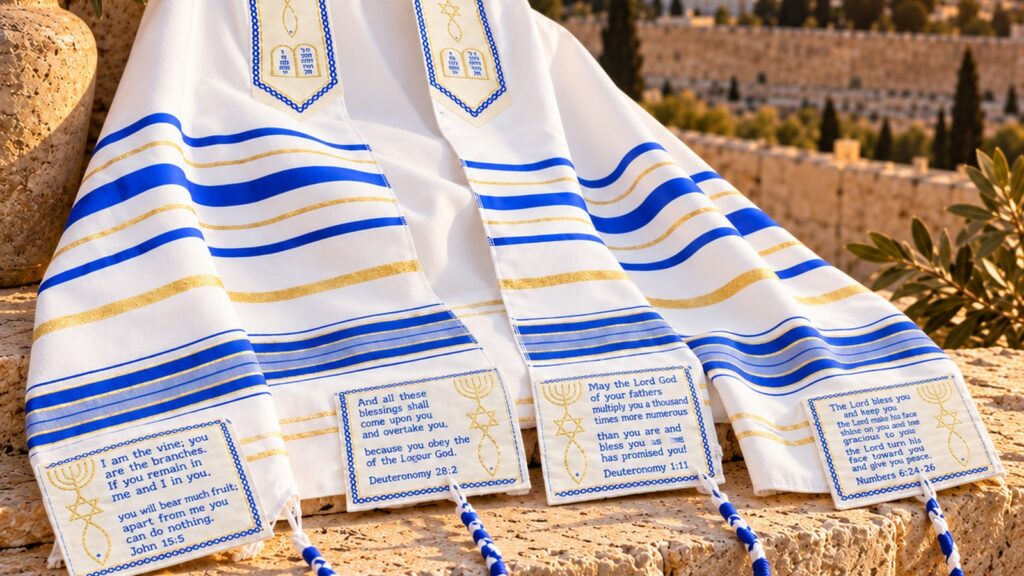
The fringes hanging from the corners of a prayer shawl are among its most meaningful features. They are called tzitzit, and their purpose comes directly from Scripture.
But what do the tzitzit on a prayer shawl mean? Why do they hang from four corners? What does the blue thread represent? Also, do the knots have a biblical meaning?
Understanding these details reveals that tzitzit were never intended to be simple decorations. They served as visible reminders of God’s commandments and the call to live faithfully before Him.
What are tzitzit?
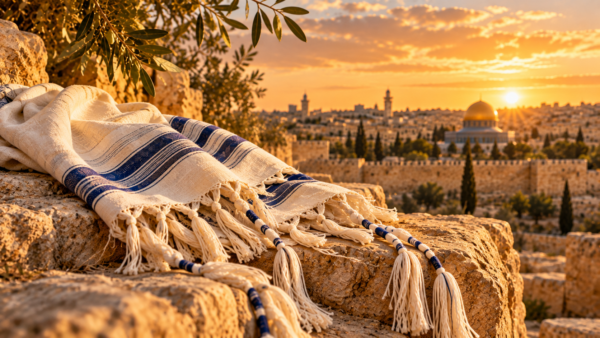
The Hebrew word tzitzit refers to fringes or tassels. In Jewish tradition, the term describes the specially tied threads attached to the four corners of a garment, including a tallit or prayer shawl.
The cloth is the garment, while the tzitzit are the fringes attached to its corners. Therefore, the two should not be confused.
A prayer shawl may include beautiful stripes, embroidery and biblical symbols. However, the tzitzit are the feature most directly connected to a command in Scripture.
The biblical origin of tzitzit
The principal biblical instruction appears in Numbers 15:37–41. God told Moses to instruct the Israelites to make tassels on the corners of their garments. They were also told to place a blue cord in each tassel.
The passage explains the purpose clearly. When the Israelites looked at the fringes, they were to remember God’s commandments and obey them. The tzitzit were intended to redirect their hearts away from temptation and toward holiness.
A second instruction appears in Deuteronomy 22:12:
“You shall make tassels on the four corners of the clothing with which you cover yourself.”
Together, these passages establish the biblical foundation of tzitzit. They also explain why prayer shawls traditionally have fringes connected to four corners.
Why are tzitzit placed on four corners?
Deuteronomy specifically refers to the four corners of a garment. As a result, the tallit developed as a four-cornered garment with fringes attached to each corner.
The four corners are not simply a decorative arrangement. They allow the garment to carry the tassels described in Scripture.
Some believers also view the four corners as a reminder that God’s authority extends in every direction. This can be a meaningful devotional interpretation. However, Scripture itself does not assign that specific symbolism to the four corners.
It is important to separate the biblical command from later interpretations. The Bible commands tassels on four corners. Other symbolic meanings developed through teaching, tradition and personal reflection.
What does the blue thread mean?
Numbers 15 instructs the Israelites to include a blue cord in the tassels. This blue thread is often known by the Hebrew word tekhelet.
Within the passage, the blue cord formed part of the visible reminder to remember God’s commandments. It was not presented merely as a fashionable color.
Blue also appears in the Tabernacle and priestly garments described in the Old Testament. For this reason, many people associate it with heaven, holiness, divine authority and obedience.
However, the clearest meaning comes from Numbers 15 itself. The thread helped remind God’s people to follow His commandments and remain holy before Him.
Today, some prayer shawls include blue threads in their tzitzit. Others have white fringes or decorative blue-and-white cords. These designs may reflect different traditions or modern Messianic styles.
Do the knots have a biblical meaning?
The Bible commands the use of fringes, but it does not provide detailed instructions for the number or arrangement of knots.
Specific knotting and winding patterns developed later within Jewish tradition. Customs can vary among Jewish communities. Therefore, not every tallit has tzitzit tied in exactly the same manner.
One well-known Jewish interpretation connects the numerical value of the Hebrew word tzitzit, together with the threads and knots, to the 613 commandments traditionally counted in the Torah.
This interpretation gives the knots a rich symbolic meaning. Still, it comes from later Jewish tradition rather than a knotting formula stated directly in Scripture.
For Christian and Messianic readers, this distinction is helpful. The fringes have a clear biblical foundation. However, the exact knotting methods reflect later religious customs.
Tzitzit as a reminder of faithfulness
The most important meaning of tzitzit is found in their purpose.
They were designed to be seen. Each time the wearer noticed them, they provided a physical reminder to remember God and obey His Word.
This principle remains meaningful today. People often become distracted by worries, responsibilities and temptations. A visible reminder can help redirect the mind toward prayer and faithfulness.
For some Messianic believers and Christians, wearing or using a prayer shawl creates a quiet space for prayer. The fringes may remind them to examine their choices, remember Scripture and seek a life that honors God.
However, the shawl itself does not create holiness. It is a reminder that points beyond itself to God.
Did Jesus wear tzitzit?
Jesus lived as a Jewish man in the first century. The Gospels also contain references to the edge or fringe of His garment.
In Matthew 9:20–22, a woman who had suffered from bleeding came behind Jesus and touched the edge of His garment. Matthew 14:36 similarly describes people asking to touch the edge of His cloak.
Many readers understand these passages as references to the fringes of a Jewish garment. The Greek word used in these accounts can refer to a border, edge or tassel.
The passages do not provide a detailed description of Jesus’ clothing. Therefore, it is wise not to make claims beyond what the text states. Still, these references fit naturally within the Jewish setting of His life and ministry.
What do tzitzit mean to Messianic believers?
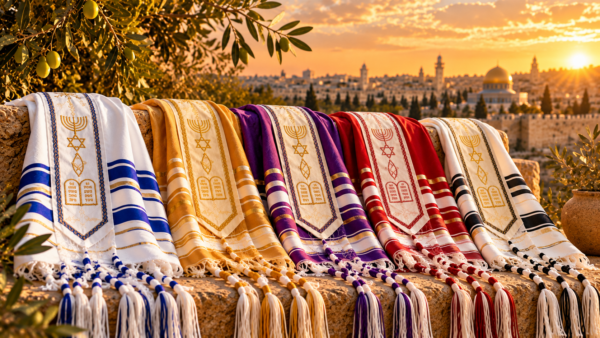
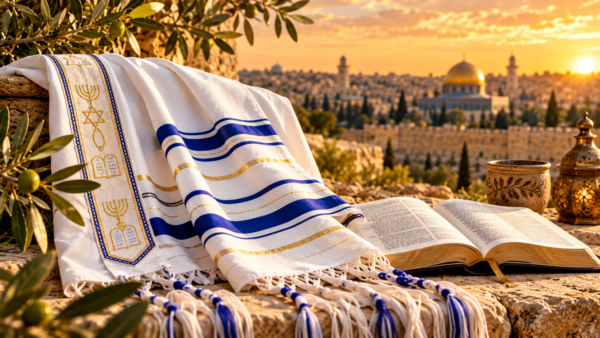
Messianic prayer shawls often combine the traditional concept of tzitzit with symbols and inscriptions that express faith in Jesus, also called Yeshua.
For many Messianic believers, the fringes connect the Old Testament command with a continuing desire to remember God’s Word. At the same time, the shawl’s symbols may reflect belief in Jesus as the promised Messiah.
Some Christians also use prayer shawls during personal prayer, worship or biblical study. They may value the shawl as a connection to the Hebraic roots of their faith.
Christian beliefs and congregational practices vary. Therefore, a prayer shawl should be used with understanding, humility and respect for its Jewish origins.
Are tzitzit spiritually powerful?
Tzitzit should not be treated as charms or objects with power of their own.
In Scripture, their purpose was to remind the wearer of God’s commandments. Their meaning depended on the response of the person who saw them.
A person could wear fringes and still ignore God’s instructions. For that reason, the outward symbol should always point toward an inward commitment.
The same principle applies to prayer shawls today. A shawl may support prayer and reflection, but it does not replace faith, obedience or a sincere relationship with God.
What should you examine when choosing a prayer shawl?
If tzitzit are important to you, look carefully at the corners before selecting a shawl.
Consider the following details:
- Are fringes attached to all four corners?
- Do the tassels appear securely tied?
- Does the shawl include blue threads?
- Are the corner patches and inscriptions clearly shown?
- Does the seller explain the meaning of the design?
- Is the shawl intended for prayer, worship, teaching or display?
Also remember that different knotting styles may reflect different customs. A difference in appearance does not automatically mean that the tzitzit lack meaning.
A visible reminder to remember God
The tzitzit on a prayer shawl carry a simple but powerful message: remember God’s Word and live faithfully.
Their four-cornered placement comes from the biblical instructions in Numbers and Deuteronomy. The blue cord served as part of that reminder. Later knotting traditions added further layers of meaning.
For Messianic believers and Christians, the fringes can encourage prayer, reflection and appreciation for the biblical roots of faith. Yet their value is not found in the threads themselves. Their purpose is to direct the heart toward God.
At 3 Arches USA, our exclusive Blessing Tallit and Holy Promise Tallit designs feature meaningful corner details and tzitzit that complement their biblical imagery. Each design is created to encourage prayer and thoughtful reflection on God’s Word.
Explore our exclusive Messianic prayer shawls and meaningful Holy Land gifts at 3 Arches USA.
“Bringing a piece of the Holy Land to your home.”

Recent Comments