
How to Choose a Messianic Prayer Shawl: Colors, Symbols and Meaning
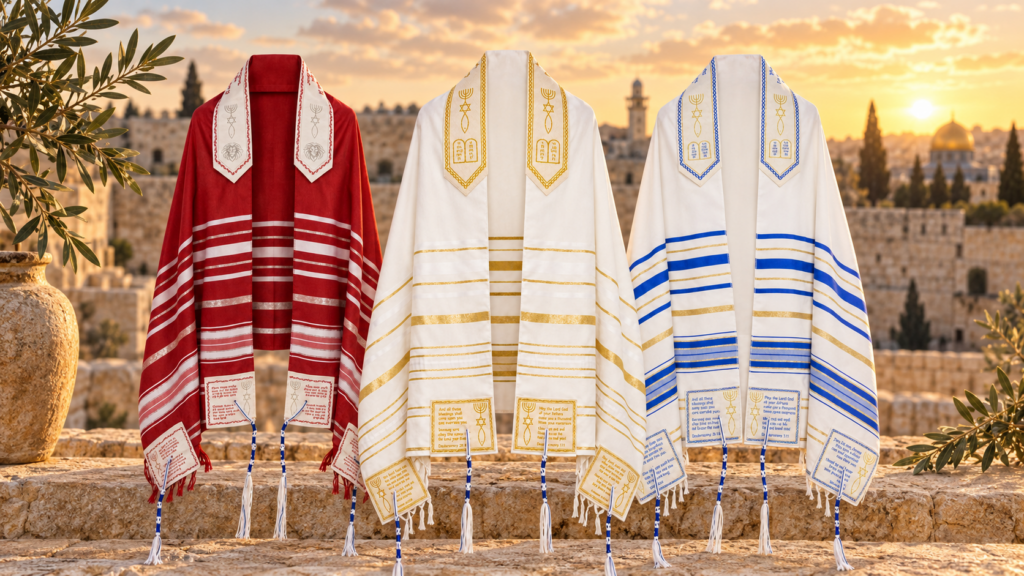
Choosing a Messianic prayer shawl is often a deeply personal decision. Some people want a shawl for private prayer. Others choose one for worship, a meaningful ceremony or a special gift.
However, the wide range of colors, symbols and inscriptions can make the decision difficult. What do the different designs represent? Does color matter? How can you choose a prayer shawl that reflects your faith and intended use?
This guide explains what to consider when choosing a Messianic prayer shawl. It also separates biblical foundations from later customs and modern design choices.
Begin with the biblical roots of the prayer shawl
The modern prayer shawl is commonly called a tallit. Its biblical foundation comes from God’s command to the Israelites concerning fringes on their garments.
In Numbers 15:37–41, the Israelites were instructed to place fringes on the corners of their garments. A blue cord was also included. These fringes served as a visible reminder to remember God’s commandments and live faithfully before Him.
Deuteronomy 22:12 also refers to tassels placed on the four corners of a garment. Therefore, the fringes, known as tzitzit, are the feature most directly connected to Scripture.
The complete prayer shawl as we recognize it today developed through Jewish history and tradition. Its stripes, decorative neckband, colors and embroidered symbols can carry meaning, but most are not specifically commanded in the Bible.
Understanding this difference can help you choose a shawl thoughtfully.
Consider why you want a Messianic prayer shawl
Before comparing designs, think about how you plan to use the shawl. This will help narrow your choices.
A Messianic prayer shawl may be chosen for:
- Personal prayer and Scripture reading
- Congregational worship
- Messianic celebrations
- Biblical teaching or ministry
- A baptism, wedding or faith milestone
- A meaningful Christian or Messianic gift
- Display in a prayer room or worship space
For regular prayer, comfort and size may be most important. For a ceremony or gift, the symbolism and presentation may carry greater significance.
A decorative shawl may also be suitable for display. However, someone who plans to wear it frequently may prefer a lighter and more practical design.
Choose a size that suits its purpose
Prayer shawls come in different sizes. Some rest around the shoulders, while larger designs provide more coverage.
A smaller shawl is often easier to carry and wear during church services, Bible studies or travel. A larger shawl can create a more enclosed space for private prayer and reflection.
Before choosing, check the product measurements rather than relying only on photographs. Consider the height of the person who will wear it and how much coverage they prefer.
Neither size is more spiritual than the other. The best choice is simply the one that supports its intended use.
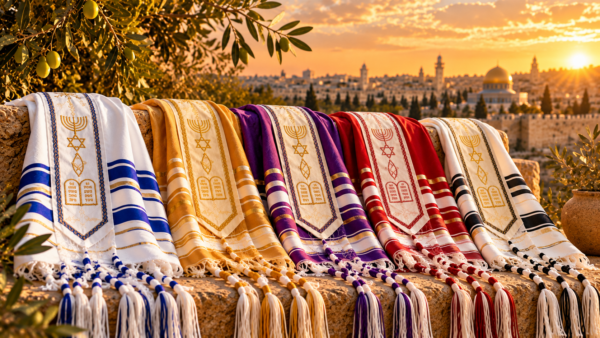
Understand the meaning of the colors
Color is often one of the first details people notice. Although colors can carry biblical associations, Scripture does not assign a required color to the entire prayer shawl.
Therefore, it is best to view these meanings as symbolic associations rather than strict biblical rules.
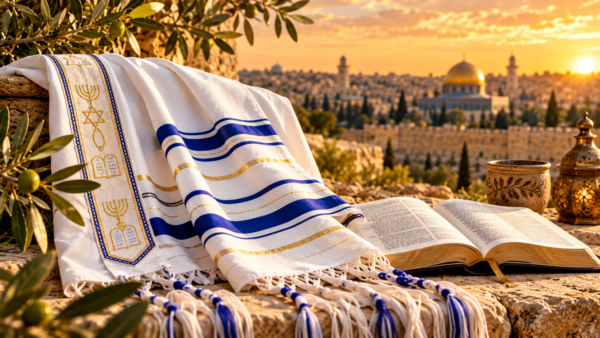
Blue prayer shawls
Blue is strongly connected with the biblical command concerning the fringes. Numbers 15 mentions a blue cord among the tassels.
Blue may remind believers of God’s commandments, heaven, faithfulness and their desire to walk in obedience. It is also one of the most familiar colors associated with traditional tallits.
White prayer shawls
White commonly represents purity, holiness and cleansing throughout Scripture. A white prayer shawl can create a simple and peaceful appearance.
It is often chosen for prayer, worship, weddings or other meaningful spiritual occasions.
Gold prayer shawls
Gold is often associated with glory, honor, kingship and the sacred furnishings of the Tabernacle and Temple.
A gold Messianic prayer shawl may appeal to someone who wants a rich, celebratory design. It can also reflect themes of worship and the majesty of God.
Red or burgundy prayer shawls
Red can bring to mind sacrifice, covenant and redemption. For many Christian believers, it may also symbolize the blood of Jesus and the gift of salvation.
However, this interpretation is devotional rather than a biblical requirement for prayer shawls.
Purple prayer shawls
Purple was historically associated with royalty and wealth. In a Christian or Messianic setting, it may represent kingship, dignity and reverence.
Many believers connect purple with Jesus as King and with His royal authority.
Ultimately, you can choose a color because of its symbolism or simply because it helps create a peaceful setting for prayer.
Look carefully at the symbols
Messianic prayer shawls often contain symbols that reflect both biblical heritage and faith in Jesus. Since designs vary, it is important to understand what appears on the shawl.
The Star of David
The Star of David is widely recognized as a symbol of Jewish identity and heritage. However, the six-pointed star is not prescribed in Scripture as a symbol for prayer shawls.
Its appearance on a tallit usually reflects a connection with the Jewish people, Israel or the Hebraic roots of the Christian faith.
The menorah
The seven-branched menorah has clear biblical roots. God gave Moses detailed instructions for the lampstand used in the Tabernacle in Exodus 25.
It can represent light, worship and God’s presence. Christians may also connect its imagery with the biblical theme of God’s light shining in the world.
The Lion of Judah
The Lion of Judah comes from Jacob’s blessing over Judah in Genesis 49:9–10. In Revelation 5:5, the title is connected with Jesus.
For this reason, the Lion of Judah is especially meaningful on a Messianic prayer shawl. It points to biblical prophecy, kingship and the Messiah.
The cross and Messianic seal
Some prayer shawls include a cross or a Messianic symbol that combines several elements. These designs openly express faith in Jesus, often called Yeshua in Messianic communities.
They distinguish a Messianic prayer shawl from a traditional Jewish tallit. Therefore, consider whether the recipient would feel comfortable wearing an explicitly Christian or Messianic design.
Examine the neckband and inscriptions
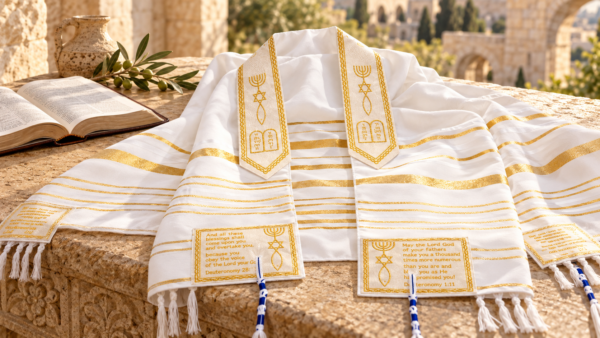
Many prayer shawls have a decorative neckband called an atarah. It may include Hebrew writing, English writing or both.
Some atarot contain a traditional Hebrew blessing associated with putting on the tallit. Others feature Scripture, Messianic declarations or names and titles for God.
Before purchasing a shawl with Hebrew writing, read the product description carefully. A trustworthy seller should explain what the inscription means.
Also examine photographs closely. The writing should be clear, correctly placed and presented with respect.
Pay attention to the fringes
The fringes are not merely decorative. They connect the garment to the biblical instructions found in Numbers and Deuteronomy.
Check whether the shawl has fringes on its four corners and whether they appear securely attached. Some Messianic shawls also include blue threads to recall the biblical command.
Knotting styles can differ according to Jewish tradition, community customs and modern manufacturing. Therefore, not every set of fringes will look the same.
If a specific traditional knotting method is important to you, verify those details before buying.
Consider the fabric and comfort
A beautiful prayer shawl should also be comfortable enough for its intended use.
Lighter fabrics are often suitable for warm climates, travel and longer worship services. Heavier materials may provide more warmth and coverage during private prayer.
Consider whether the fabric is soft, breathable and easy to care for. Also check the washing instructions, especially if the shawl contains embroidery, metallic thread or delicate fringes.
Comfort may seem like a practical detail. Yet it can make a significant difference when the shawl is used regularly.
Choose a design that supports prayer
Symbols and colors can enrich the experience of wearing a prayer shawl. Still, the shawl itself is not the source of blessing or spiritual power.
Its purpose is to serve as a reminder. It can encourage reverence, focused prayer and reflection on God’s Word.
The best Messianic prayer shawl is not necessarily the most ornate one. Instead, it is the shawl whose design, message and craftsmanship help direct the wearer’s heart toward God.
Choosing a Messianic prayer shawl as a gift
A prayer shawl can be a meaningful gift for someone beginning a new season of faith or celebrating an important milestone.
Before choosing one, consider the recipient’s beliefs, congregation and personal preferences. Some people appreciate strong Messianic imagery. Others prefer a simpler design with traditional colors and subtle biblical symbols.
You may also consider the occasion. White and gold can work beautifully for weddings or celebrations. Blue is a timeless choice for prayer and worship. Purple or red may suit someone drawn to themes of royalty, covenant and redemption.
Including a short explanation of the shawl’s symbols can make the gift even more meaningful.
A thoughtful choice rooted in faith
Learning how to choose a Messianic prayer shawl involves more than selecting an attractive color. Consider its purpose, size, fabric, fringes, inscriptions and symbols.
Most importantly, understand which features come directly from Scripture and which developed through tradition or modern Messianic expression.
At 3 Arches USA, our exclusive Blessing Tallit and Holy Promise Tallit designs combine meaningful biblical imagery with carefully selected colors and inscriptions. Each design is intended to encourage prayer, worship and a deeper connection with the biblical heritage of faith.
Choose a shawl that speaks to your heart, supports your time in prayer and keeps your attention centered on God.
Explore our exclusive Messianic prayer shawls and meaningful Holy Land gifts at 3 Arches USA.
“Bringing a piece of the Holy Land to your home.”

Recent Comments