
What Is Written on a Messianic Prayer Shawl?
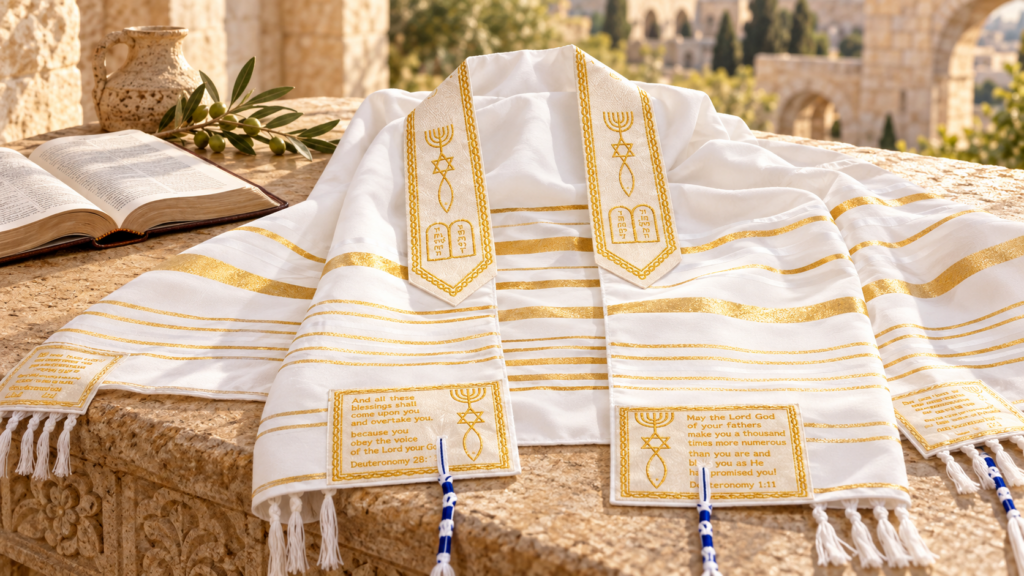
A Messianic prayer shawl often contains Hebrew writing, biblical verses and meaningful symbols. Each detail can help connect the wearer with Scripture and the Hebraic roots of the Christian faith.
However, not every prayer shawl contains the same words. Traditional Jewish tallits, modern Messianic shawls and decorative Christian prayer shawls can feature very different inscriptions.
So, what is written on a Messianic prayer shawl? The answer depends on its design, purpose and faith tradition.
Understanding the different parts of a prayer shawl
Before examining the writing, it helps to understand where the inscriptions usually appear.
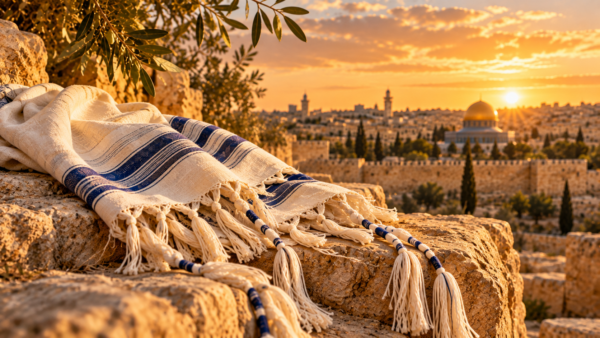
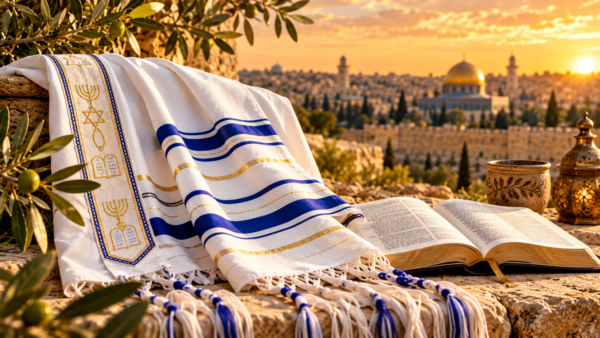
Many prayer shawls have a decorative neckband called an atarah. The word means “crown” in Hebrew. It sits along the upper edge of the shawl and helps identify which side should rest around the neck.
Writing may also appear on reinforced fabric panels at the shawl’s four corners. These panels support the areas where the tzitzit, or fringes, are attached.
Messianic designs may add Scripture passages, Hebrew names, biblical symbols or references to Jesus, also called Yeshua.
What is written on the atarah?
The atarah is one of the most noticeable features of a prayer shawl. On a traditional Jewish tallit, it often displays the blessing recited before putting on the garment.
The traditional blessing thanks God for sanctifying His people through His commandments and commanding them to wrap themselves in tzitzit.
This blessing is part of Jewish religious tradition. It is not a verse copied directly from the Bible. However, it refers to the biblical command concerning fringes found in Numbers 15:37–41 and Deuteronomy 22:12.
Some atarot do not contain the traditional blessing. Instead, they may feature decorative embroidery, the Hebrew name of the wearer or a short biblical phrase.
On a Messianic prayer shawl, the neckband may include additional symbols or words that express faith in Jesus as the Messiah.
Is the writing always in Hebrew?
No. Prayer shawls may contain Hebrew, English or a combination of both languages.
A traditional tallit will often display Hebrew without an English translation. A Messianic prayer shawl may place English beside Hebrew so the wearer can understand the meaning.
Some designs use Hebrew primarily for its connection to the language of the Old Testament. Others include full verses in English, making their message easier to read during prayer or worship.
The presence of Hebrew does not automatically mean that a shawl is traditional or ceremonially made. Buyers should read the product description and look closely at the embroidery before selecting one.
Biblical verses on Messianic prayer shawls
Messianic prayer shawls often include verses from both the Old and New Testaments.
These passages may focus on blessing, covenant, prayer, obedience, peace or the identity of Jesus as the Messiah.
Common themes include:
- Remembering God’s commandments
- Receiving God’s blessing and protection
- Remaining connected to God
- Walking faithfully before Him
- Recognizing Jesus as the promised Messiah
- Praying for peace and restoration
The specific verses vary between designs. Therefore, it is important to examine each shawl rather than assuming they all contain the same words.
The Aaronic blessing
Some prayer shawls feature the priestly blessing found in Numbers 6:24–26.
This passage asks the Lord to bless, keep and show favor to His people. It concludes with a prayer for peace.
The blessing is closely connected with biblical worship and has remained meaningful in both Jewish and Christian communities. For this reason, it often appears on religious gifts, jewelry, home décor and prayer shawls.
When included on a Messianic shawl, the Aaronic blessing can remind the wearer of God’s care, grace and peace.
Promises from Deuteronomy
Some Messianic prayer shawls also feature passages from Deuteronomy.
Deuteronomy 1:11 expresses the hope that the Lord will multiply His people and bless them as He promised. Deuteronomy 28 opens with blessings connected to faithfully listening to God.
These verses reflect themes of covenant, obedience and divine blessing. They can encourage the wearer to remember that biblical blessings are connected with a life directed toward God.
However, individual verses should always be understood within their larger biblical context. They should not be treated as automatic promises of wealth or success.
Words of Jesus on a prayer shawl
Modern Messianic prayer shawls may also feature words spoken by Jesus.
John 15:5 is one example. In this verse, Jesus describes Himself as the vine and His followers as the branches. The passage teaches that spiritual fruitfulness comes from remaining connected to Him.
For Messianic believers and Christians, including this verse connects the imagery of the prayer shawl with faith in Jesus as the Messiah.
This type of New Testament inscription would not appear on a traditional Jewish tallit. It is a distinct feature of a Messianic or Christian prayer shawl.
Hebrew names and titles
Some prayer shawls display Hebrew names or titles connected with God and the Messiah.
A Messianic shawl may include the Hebrew name Yeshua, which corresponds to the name Jesus. It may also contain titles such as Messiah, King or Lion of Judah.
These names and titles communicate the faith perspective of the design. Therefore, someone purchasing a shawl as a gift should ensure that its message agrees with the recipient’s beliefs.
Symbols may communicate alongside the writing
The written words are often surrounded by embroidered symbols.
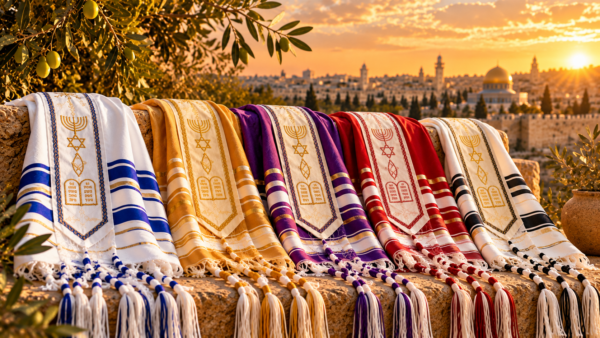
Common examples include:
The menorah
The seven-branched menorah comes from the biblical design given for the Tabernacle. It can represent light, worship and God’s presence.
The Star of David
The Star of David is widely associated with Jewish identity and heritage. However, Scripture does not command its use on a prayer shawl.
The fish
The fish became an important symbol among early Christians. On a Messianic prayer shawl, it may express faith in Jesus.
The tablets of the commandments
Two tablets can represent the commandments given to Moses and the importance of remembering God’s Word.
The Lion of Judah
This symbol draws from Genesis 49 and Revelation 5. Messianic believers commonly connect it with Jesus as the promised King and Messiah.
These symbols help communicate the shawl’s message even when the written words are not immediately visible.
Is every inscription taken directly from Scripture?
No. Some inscriptions are direct biblical quotations, while others are traditional blessings, devotional phrases or modern Messianic statements.
This distinction matters.
A traditional blessing may express a biblical principle without being a Bible verse. A symbolic phrase may reflect Christian belief without appearing word for word in Scripture.
A reliable seller should explain where the inscription comes from. The description should identify the Bible passage when a direct verse is used.
Why accurate writing matters
Hebrew and English writing should be treated carefully, especially when it appears on a religious garment.
Before purchasing a prayer shawl, examine the product photographs and description. Look for clear embroidery, accurate verse references and an explanation of the symbols.
This is especially important when buying a shawl as a gift. The recipient should be able to understand and appreciate its message.
The writing should never be added only as decoration. It should contribute meaningfully to the shawl’s purpose.
Choosing a shawl by its message
The inscription can help you choose a prayer shawl that reflects its intended purpose.
A shawl featuring the Aaronic blessing may be suitable for someone seeking encouragement and peace. A design centered on John 15 may support reflection on remaining close to Jesus.
A shawl with verses from Deuteronomy may emphasize obedience, covenant and blessing. Meanwhile, one featuring the Lion of Judah may focus more strongly on the identity and kingship of the Messiah.
Consider the words before focusing on color alone. The message may become the most meaningful part of the shawl during prayer.
More than decorative embroidery
The writing on a Messianic prayer shawl can bring together Scripture, prayer and meaningful biblical imagery.
The atarah may contain a traditional blessing, decorative symbols or a Messianic declaration. The corner panels may feature passages from the Old or New Testament. Together, these details can encourage the wearer to remember God’s Word.
Still, the shawl itself is not the source of blessing. Its words and symbols should direct the heart toward God, Scripture and sincere prayer.
At 3 Arches USA, our exclusive Blessing Tallit and Holy Promise Tallit designs feature carefully selected Scriptures, symbols and embroidered details. Each design carries its own message and provides a meaningful setting for prayer, worship and reflection.
Explore our exclusive Messianic prayer shawls and meaningful Holy Land gifts at 3 Arches USA.
“Bringing a piece of the Holy Land to your home.”

Recent Comments