
What Is the Significance of the Mount of Olives in the Bible?
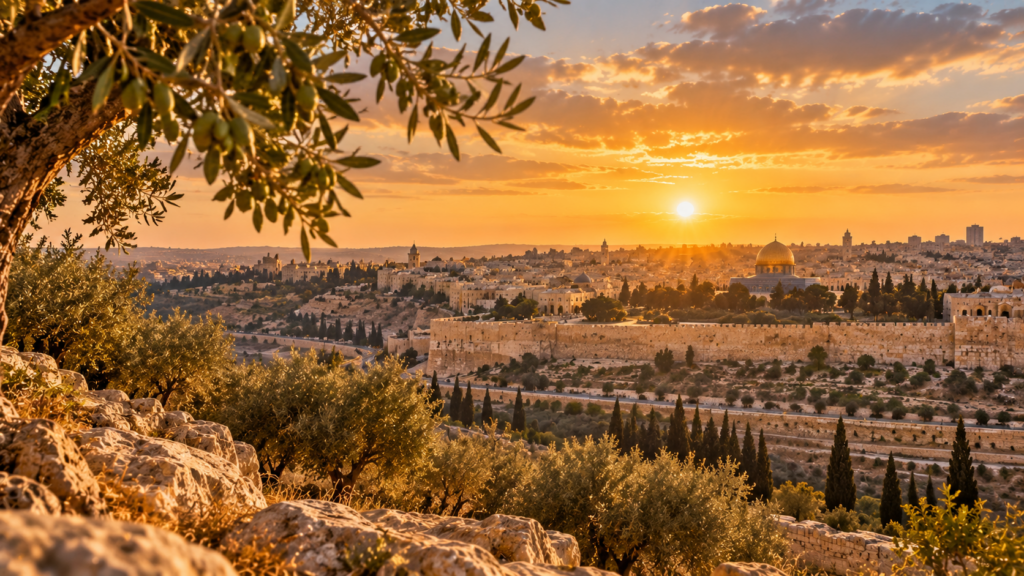
The Mount of Olives in the Bible is connected with many important events. It stands just east of Jerusalem, across the Kidron Valley.
Jesus visited this area many times. He taught His disciples there and prayed nearby before His arrest. The area is also connected with His ascension.
For Christians, the Mount of Olives is a powerful reminder of prayer, sacrifice, hope, and God’s promises.
Where Is the Mount of Olives?
The Mount of Olives is a ridge east of the Old City of Jerusalem.
Its name comes from the olive trees that grew on its slopes. From the mountain, people can look across the Kidron Valley toward Jerusalem.
Because of its location, the Mount of Olives appears several times in Scripture.
The Mount of Olives in the Old Testament
The mountain appears in the Bible before the time of Jesus.
In 2 Samuel 15, King David fled Jerusalem during the rebellion of his son Absalom. David crossed the Kidron Valley and went up the Mount of Olives weeping.
Later, the mountain also appeared in biblical prophecy.
In Zechariah 14, the Mount of Olives is connected with the future Day of the Lord.
Therefore, the mountain has both historical and prophetic importance.
Jesus and the Mount of Olives
The Mount of Olives in the Bible is especially important because of its connection with Jesus.
During His final days in Jerusalem, Jesus often travelled through this area.
It was a familiar place to Him and His disciples. Several important events took place there during the final week before His crucifixion.
The Triumphal Entry
Jesus approached Jerusalem from the direction of the Mount of Olives before His triumphal entry.
He entered the city riding on a donkey. Meanwhile, crowds welcomed Him and praised God.
Christians remember this event on Palm Sunday.
As a result, the Mount of Olives became closely connected with the beginning of Holy Week.
Jesus Wept Over Jerusalem
The mountain is also connected with a deeply emotional moment.
In Luke 19:41, Jesus looked toward Jerusalem and wept over the city.
This moment reveals His compassion.
Therefore, the Mount of Olives reminds believers not only of Christ’s authority but also of His love.
Jesus Taught His Disciples There
Jesus also used the Mount of Olives as a place of teaching.
In Matthew 24, His disciples came to Him with questions about future events.
Jesus spoke about spiritual readiness, perseverance, and what was to come.
This teaching is often called the Olivet Discourse.
For Christians, it remains an important reminder to stay faithful and spiritually prepared.
The Garden of Gethsemane
One of the strongest connections with the Mount of Olives is the Garden of Gethsemane.
After the Last Supper, Jesus went there with His disciples.
He knew that His arrest and crucifixion were approaching. Therefore, He spent time in prayer.
Jesus experienced great sorrow. Still, He submitted Himself to the Father’s will.
For this reason, Gethsemane has become a powerful symbol of prayer, surrender, and obedience.
Jesus Was Arrested Near the Mount
After Jesus prayed, Judas arrived with those who came to arrest Him.
This began the events that led to the crucifixion.
A peaceful place of prayer suddenly became a place of betrayal.
Yet Jesus continued toward the cross, knowing what was ahead.
The Ascension of Jesus
The Mount of Olives remained important after the resurrection.
In Acts 1, Jesus ascended into heaven. His disciples later returned to Jerusalem from the mount called Olivet.
As Jesus ascended, the disciples were told that He would return.
Therefore, the Mount of Olives became connected with Christian hope and the promised return of Christ.
What Does the Mount of Olives Symbolize?
The Mount of Olives carries several important meanings for Christians.
It represents prayer because Jesus prayed nearby in Gethsemane.
It represents surrender because Jesus accepted the Father’s will.
The mountain also represents compassion because Jesus wept over Jerusalem.
Finally, it represents hope because of the ascension and the promise of Christ’s return.
Why Does the Mount of Olives Still Matter?
The Mount of Olives remains one of the most meaningful biblical locations in the Holy Land.
Visitors can still look across the Kidron Valley toward Jerusalem.
Seeing the landscape can help believers understand that the events of Scripture happened in real places.
However, Christians do not need to travel to Jerusalem to appreciate its meaning.
Learning about the places of the Bible can deepen our understanding of Scripture and bring familiar stories to life.
A Place of Prayer, Promise, and Hope
The Mount of Olives in the Bible connects many important moments.
King David crossed it in sorrow. Jesus travelled through the area, taught His disciples, and wept over Jerusalem. He also prayed nearby before His arrest.
Later, the mountain became connected with His ascension.
For Christians, the Mount of Olives remains a beautiful reminder of prayer, surrender, faith, and hope.
Above all, it points believers toward Jesus, His sacrifice, and the promises of God.
Explore meaningful Holy Land gifts and biblical treasures at 3 Arches USA.
“Bringing a piece of the Holy Land to your home.”



Recent Comments