
What Does the Desert Symbolize in the Bible?
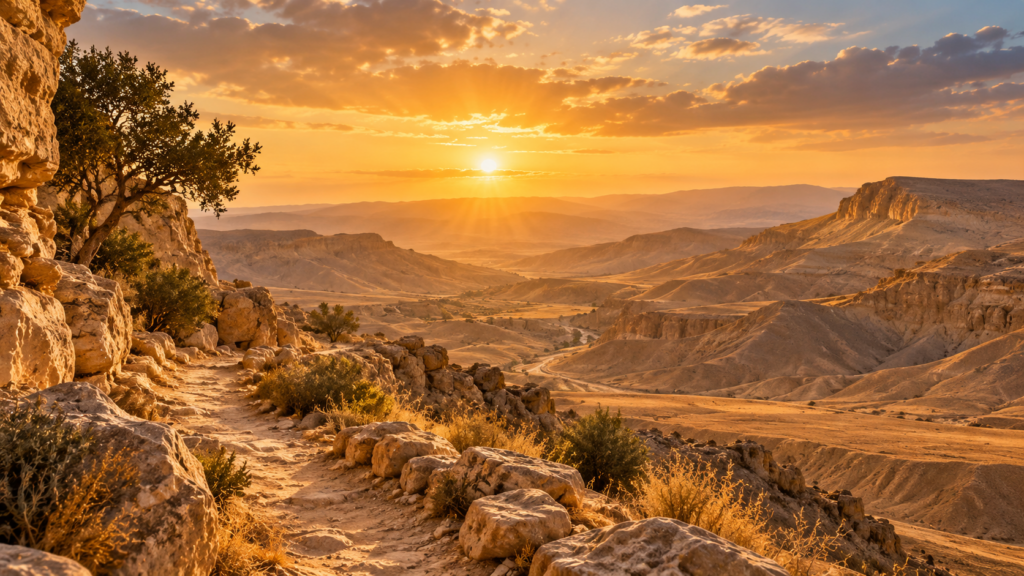
The desert in the Bible is often a place of testing, preparation, and encounter with God. From the Israelites wandering in the wilderness to Jesus fasting for forty days, some of Scripture’s most important events took place in dry and difficult landscapes.
At first, the desert may seem like a symbol of hardship. Yet the Bible often shows something deeper. It can become a place where distractions disappear, faith is tested, and people learn to depend more fully on God.
The Desert as a Place of Testing
Life in the desert was difficult. Water was scarce, food was limited, and the landscape offered little comfort.
For this reason, the wilderness became a natural setting for testing.
After leaving Egypt, the Israelites spent forty years in the wilderness before entering the Promised Land. During this time, they faced hunger, thirst, fear, and uncertainty.
Deuteronomy 8 explains that this wilderness experience tested their hearts. It also taught them that they depended upon God.
The journey was difficult. However, it became an important part of Israel’s spiritual formation.
God Provided in the Wilderness
The desert in the Bible is not only a place of hardship. It is also a place of provision.
When the Israelites were hungry, God provided manna. When they needed water, He provided for them.
Their circumstances often looked impossible. Still, God continued to sustain them.
This gives the wilderness an important biblical meaning. Difficult seasons may reveal our limitations, but they can also remind us of God’s provision.
The desert teaches us that dependence on God is not weakness. It is an essential part of faith.
Moses and the Desert
The wilderness played an important role in the life of Moses.
Before leading Israel out of Egypt, Moses spent many years in Midian. He lived away from the royal life he had known in Egypt.
Then, while tending sheep near Mount Horeb, Moses encountered the burning bush.
God called him from that wilderness setting to return to Egypt and lead His people toward freedom.
The desert therefore became a place of preparation.
Moses may have thought that part of his life was simply a long period of waiting. Yet God was preparing him for a much greater purpose.
Elijah Encountered God in the Wilderness
The prophet Elijah also experienced the wilderness during a difficult season.
In 1 Kings 19, Elijah fled into the desert exhausted and afraid. He sat beneath a tree and felt overwhelmed.
Yet God did not abandon him.
Instead, Elijah received food, water, and rest before continuing his journey.
Later, at Horeb, he experienced God’s presence in a remarkable way.
This story offers a gentle reminder that spiritual strength does not mean never becoming tired. Sometimes God’s provision begins with rest before the journey continues.
Jesus Was Tempted in the Wilderness
The desert also played an important role at the beginning of Jesus’ public ministry.
After His baptism in the Jordan River, Jesus went into the wilderness for forty days.
There, He fasted and was tempted by the devil.
Jesus answered temptation with Scripture and remained faithful to the Father.
This event connects His story with earlier biblical wilderness experiences. Israel had spent forty years in the wilderness. Moses also spent forty days fasting on Mount Sinai.
However, where others had struggled and failed, Jesus remained obedient.
For Christians, the wilderness temptation shows the importance of knowing God’s Word and remaining faithful during times of testing.
Why Does the Number Forty Appear So Often?
The number forty appears several times in biblical stories connected with testing and preparation.
Rain fell for forty days and nights during the flood. Moses spent forty days on Mount Sinai. Israel wandered for forty years. Jesus fasted for forty days.
Because of these examples, forty is often associated with a significant period of testing, preparation, or transition.
The important lesson is not the number alone. Rather, these stories show that God can use seasons of waiting and difficulty to prepare people for what comes next.
The Desert as a Place of Spiritual Preparation
Biblical wilderness experiences often happen before something important.
Moses encountered God before returning to Egypt.
Israel travelled through the wilderness before entering the Promised Land.
Jesus spent forty days in the wilderness before beginning His public ministry.
This pattern gives the desert in the Bible another powerful meaning: preparation.
Not every quiet or difficult season means that something dramatic will immediately follow. Still, Scripture shows that periods of waiting can have purpose.
Sometimes growth happens before we can see the result.
The Desert Can Become a Place of Encounter
The wilderness may appear empty, but many biblical figures encountered God there.
Away from cities, crowds, and familiar comforts, the desert created a place of simplicity.
This does not mean believers must physically enter a desert to experience God. Instead, the biblical image can help us understand seasons when life becomes quieter or when familiar supports disappear.
Those seasons can encourage deeper prayer and greater dependence on God.
The wilderness may feel empty, yet it can become a place where faith grows.
What Can the Desert Teach Christians Today?
Most believers will experience their own kind of wilderness season.
It may be a period of waiting. It may involve uncertainty, disappointment, loneliness, or a difficult transition.
The biblical desert offers several reminders during these times.
First, God remains present even when the path feels uncertain.
Second, difficult seasons can reveal where we have placed our trust.
Third, waiting does not always mean that nothing is happening. Growth and preparation may be taking place quietly.
Finally, the wilderness reminds us to depend upon God’s Word and His provision rather than our own strength.
From Wilderness to Hope
The Bible does not present the desert only as a place to escape.
Again and again, people pass through the wilderness and emerge changed.
Israel moved toward the Promised Land. Moses received a calling. Elijah received strength to continue. Jesus emerged from the wilderness and began His public ministry.
The desert was part of their journey, but it was not the end of their story.
That is one of its most encouraging biblical meanings.
A Lasting Symbol of Faith and Dependence
The desert in the Bible represents testing, dependence, preparation, and encounter with God.
Its landscape may appear empty, but Scripture shows that God can work powerfully in places that seem barren.
The wilderness reminds believers that difficult seasons do not mean God is absent. They can become times to seek Him more deeply, trust His provision, and remain faithful while waiting for the road ahead to become clear.
From Moses and Israel to Elijah and Jesus, the desert carries a message that still speaks today: God is present in the wilderness, and He can use the journey to strengthen our faith.
Explore meaningful Holy Land gifts and biblical treasures at 3 Arches USA.
“Bringing a piece of the Holy Land to your home.”



Recent Comments