
What Is Frankincense and Why Was It So Valuable?
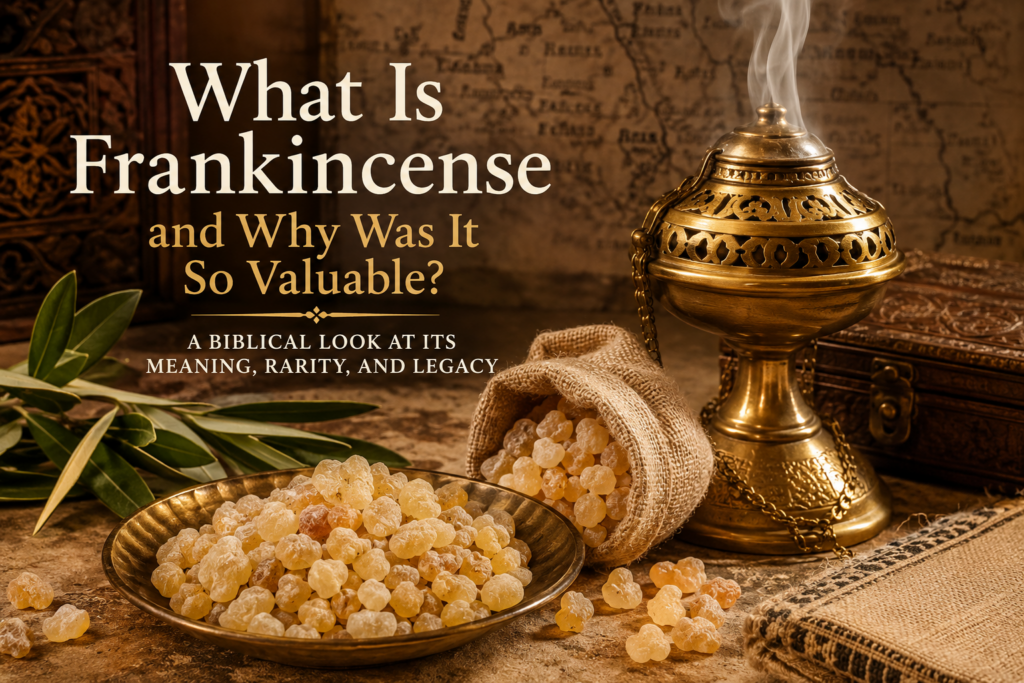
Few biblical gifts carry as much mystery and reverence as frankincense. If you have ever wondered, What Is Frankincense and Why Was It So Valuable?, the answer reaches far beyond a pleasant scent. In Scripture and sacred tradition, frankincense was prized because it was rare, costly, difficult to obtain, and deeply connected to worship.
Frankincense is an aromatic resin taken from Boswellia trees, which grow mainly in parts of the Arabian Peninsula, East Africa, and nearby regions. Harvesters make careful cuts in the bark, and the tree releases a milky sap that hardens into pale golden tears. Those dried resin pieces are what people know as frankincense.
When heated, frankincense gives off a rich, clean, balsamic fragrance. In the ancient world, that fragrance was not simply enjoyed for pleasure. It was associated with prayer, sacred space, temple service, and honor. That alone helps explain why it became one of the most meaningful substances mentioned in the Bible.
What Is Frankincense in the Bible?
In the Bible, frankincense appears as part of holy worship and as a gift fit for royalty. Under the Old Testament sacrificial system, frankincense was used with certain grain offerings and in sacred incense. Its fragrance rising upward carried strong spiritual symbolism, often understood as reflecting prayer and devotion offered before God.
This is why frankincense was never treated as an ordinary household material. It belonged to the language of reverence. It was part of worship shaped by obedience, beauty, and holiness.
Many believers also know frankincense from the Nativity account. The wise men brought gold, frankincense, and myrrh to the child Jesus. These were not random gifts. Gold honored kingship. Frankincense pointed to worship and priestly significance. Myrrh carried associations with suffering, burial, and costly devotion. Together, the gifts spoke with remarkable depth.
Why Was Frankincense So Valuable?
The value of frankincense came from several realities at once. First, it was geographically limited. It did not grow everywhere, which meant it had to be sourced from specific regions and transported long distances. In the ancient world, that kind of trade required time, labor, protection, and established caravan routes.
Second, harvesting frankincense was skilled work. Resin did not appear ready for market overnight. Trees had to be tapped properly, the sap had to harden, and the tears had to be collected and sorted. Better quality frankincense commanded higher value because purity, color, and aroma mattered.
Third, demand was strong. Frankincense was used in worship, burial customs, perfumery, and elite households. When a material is both spiritually important and difficult to acquire, its worth rises quickly.
There is also a biblical reason it felt especially valuable. Anything tied to temple use, priestly service, or gifts of honor carried more than market price. It carried meaning. Frankincense represented offering, reverence, and costly devotion. That made it valuable not only in trade, but in the hearts of worshipers.
What Made Frankincense Different From Common Spices?
Frankincense was not just another spice on a merchant shelf. Unlike everyday seasonings or local herbs, it was a resin with sacred and ceremonial importance. Its fragrance lingered, and its use was often connected to prayer, consecration, and holy settings.
That distinction matters. Ancient people understood that some materials were for daily life, while others were reserved for moments of honor before God. Frankincense belonged in that second category. Its rarity and spiritual symbolism made it a fitting expression of offering something precious rather than convenient.
Why Frankincense Still Matters Today
Frankincense continues to hold meaning for Christians and faith-centered families because it connects modern devotion to biblical memory. It reminds believers that worship has always involved intentionality, sacrifice, and beauty set apart for the Lord.
For many people, Holy Land-inspired items such as frankincense resin, anointing oils, incense gifts, and nativity pieces are meaningful because they bring Scripture closer to everyday worship. They are not substitutes for faith, but they can serve as tangible reminders of biblical truth, especially during prayer, Christmas reflection, church gatherings, and gift-giving seasons.
There is also a reason frankincense remains a beloved gift. It carries both sacred heritage and lasting symbolism. For someone who treasures the Nativity story, biblical worship, or the rich traditions of the Holy Land, frankincense is more than an ancient substance. It is a reminder that the things offered to God were meant to be worthy, fragrant, and set apart.
At 3 Arches USA, that heritage still speaks clearly to believers who want meaningful religious products rooted in Scripture and sacred tradition.
Frankincense was valuable because it was rare, beautiful, and deeply bound to worship. That is still the reason it captures attention today. It invites us to remember that in biblical faith, what was offered before God was never casual. It was chosen with care, carried with honor, and filled with meaning.
Discover faith-inspired biblical fragrances that help bring the rich traditions and symbolism of Scripture into your home.

Recent Comments