
Menorah Versus Hanukkiah Difference Explained
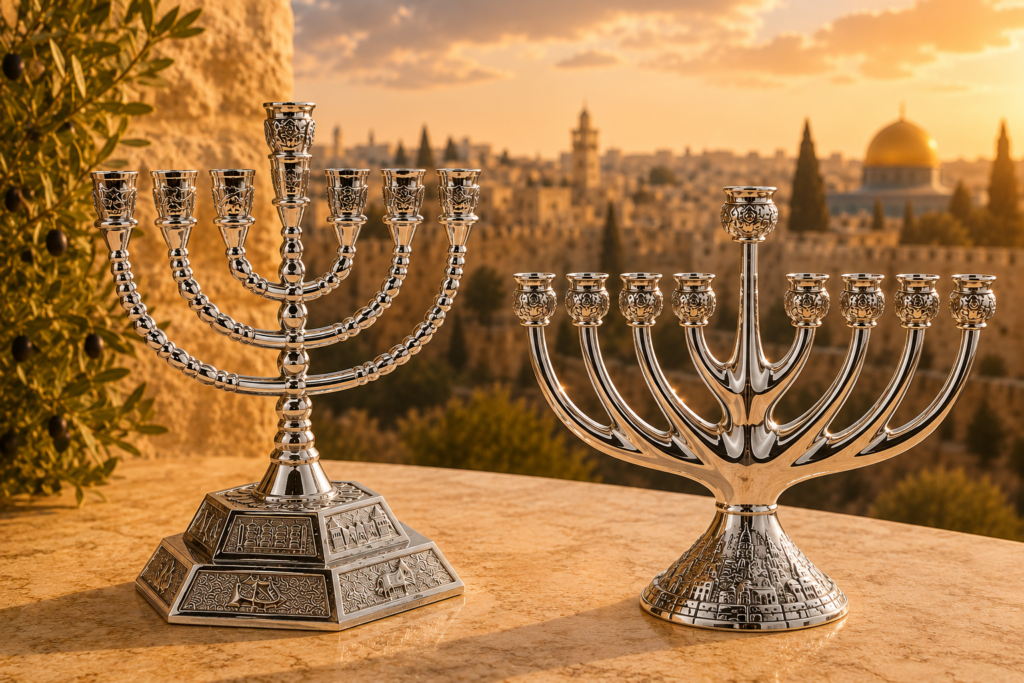
A seven-branched lamp appears in Scripture, sacred art, and Jewish history. Yet the candleholder seen glowing during Hanukkah has nine lights, not seven. That visible difference is the starting point for understanding the menorah versus hanukkiah difference – and for choosing a meaningful piece for a Jewish home, a Hanukkah gift, or a faith-centered collection.
The words are often used interchangeably in everyday conversation, especially in the United States. But they do not describe the same ceremonial object. Each carries its own history, purpose, and place within Jewish tradition.
Menorah vs. Hanukkiah: The Essential Difference
A menorah is traditionally a seven-branched lampstand. Its most recognized biblical form is the golden lampstand commanded for the Tabernacle, described in Exodus 25. It stood in the Holy Place and was made with a central shaft and six branches, creating seven lamps in all. The menorah later became associated with the Temple in Jerusalem and remains one of the enduring symbols of the Jewish people.
A hanukkiah, by contrast, is the lampstand used specifically for Hanukkah. It has nine candleholders: eight for the eight nights of the festival and one additional holder for the shamash, or helper candle. The shamash is used to light the other candles, rather than using one Hanukkah light to kindle another.
Put simply, the seven-branched menorah recalls the Tabernacle and Temple. The nine-branched hanukkiah is used to celebrate Hanukkah, the Festival of Lights. Both are deeply meaningful, but they should not be treated as identical.
Why the Menorah Has Seven Branches
The biblical menorah is more than decorative religious art. In the Torah, it was a holy furnishing created according to specific instructions. Exodus describes it as being fashioned from pure gold, with almond-blossom details, cups, buds, and flowers. Its lamps were tended so that light would burn before the Lord.
Seven has rich biblical resonance. It calls to mind the seven days of creation and the completeness of God’s work. For Jewish worship, the Temple menorah also speaks of holy service, divine presence, and the light that belongs in a consecrated place.
Today, the seven-branched menorah is widely used as a symbol of Jewish heritage, Israel, and biblical faith. It appears on the modern emblem of the State of Israel, often depicted with the two olive branches referenced in Zechariah. A seven-branch menorah can be a thoughtful display piece for those who treasure Scripture, Jewish tradition, and the heritage of the Holy Land.
Still, a traditional seven-branched menorah is not the lampstand used for the annual Hanukkah candle-lighting observance. That distinction matters, particularly when giving a holiday gift.
Why the Hanukkiah Has Nine Lights
Hanukkah commemorates the rededication of the Temple in Jerusalem after the Maccabean revolt in the second century BCE. Jewish tradition tells of a small supply of consecrated oil that was sufficient for one day but burned for eight days, until more pure oil could be prepared.
The hanukkiah honors that miracle of light. It includes eight holders, one for each night of Hanukkah. On the first night, one candle is lit. An additional candle is lit on each succeeding night, so all eight lights shine on the final evening.
The ninth holder is reserved for the shamash. It is often set higher, lower, or apart from the eight main lights so its separate role is clear. A hanukkiah may be made of polished brass, silver-tone metal, ceramic, olive wood accents, glass, or other materials, but its defining feature is its nine-light arrangement.
In many homes, the hanukkiah is placed where its lights can be seen, such as near a window or doorway. This reflects the desire to publicize the miracle of Hanukkah. Practical safety always comes first: place it on a stable, heat-safe surface, keep it away from curtains and children, and never leave burning candles unattended.
Is a Hanukkiah Also Called a Menorah?
Yes, often. In American English, many people call a Hanukkah lamp a “Hanukkah menorah.” That phrase is understandable and commonly used in stores, family conversations, and product searches. In Hebrew, however, menorah can refer broadly to a lamp, while hanukkiah gives the object its more precise Hanukkah identity.
There is no need to correct someone harshly for using the familiar phrase “Hanukkah menorah.” But when accuracy is helpful, especially while shopping or teaching children, calling the nine-branched lamp a hanukkiah honors its specific purpose.
The simplest way to remember the difference is to count the holders. Seven branches point to the biblical Temple menorah. Nine holders point to a Hanukkah hanukkiah.
Choosing the Right Piece for Your Home or Gift
The right choice depends on the occasion and the intended use. If you are buying for Hanukkah candle lighting, select a hanukkiah with eight equal candle spaces plus a distinct shamash holder. Check whether it is designed for standard Hanukkah candles, oil cups, or both. A beautiful piece is most useful when its holder size matches the candles a family plans to use.
If you are selecting a faith-inspired display for year-round use, a seven-branched menorah may be the better fit. It carries strong biblical symbolism and can complement a prayer room, family gathering space, church educational display, or collection of Holy Land-inspired religious items.
Material also makes a difference. Metal hanukkiot are often durable and easy to clean after candle wax is removed. Ceramic designs can bring color and handcrafted character to a holiday table, though they need gentler handling. Olive wood pieces offer a warm connection to the land and trees associated with biblical Israel, but buyers should verify whether the candle cups are properly protected from heat and dripping wax.
For gifting, consider the recipient’s tradition and level of observance. A family that lights candles every year may appreciate a practical, well-made hanukkiah that can become part of a treasured annual ritual. Someone building a collection around biblical heritage may prefer a seven-branched menorah with classic Temple-inspired styling. When in doubt, choose the object that fits the recipient’s actual practice rather than selecting only by appearance.
A Respectful Word for Christian and Messianic Buyers
Many Christians and Messianic believers feel drawn to the menorah because of its biblical setting and its powerful witness to God’s light. That interest can lead to meaningful study of Scripture and deeper appreciation for the Jewish roots of faith. At the same time, Hanukkah remains a distinctly Jewish observance, with customs, prayers, and family traditions that deserve respect.
For Christian households, a seven-branched menorah may be a fitting reminder of the Tabernacle, the Temple, and biblical worship. A hanukkiah can also be an appropriate gift or educational piece when chosen with understanding of its Jewish purpose. The difference is not about making one lampstand more sacred than the other. It is about recognizing what each one represents.
At 3 Arches USA, meaningful Judaica and Holy Land-inspired gifts are best chosen with both reverence and clarity. Whether you are marking Hanukkah with a hanukkiah or displaying a biblical seven-branched menorah, let the piece before you point beyond decoration to remembrance, faith, and the enduring testimony of light.

Recent Comments