
Olive Wood Rosaries for Meaningful Prayer
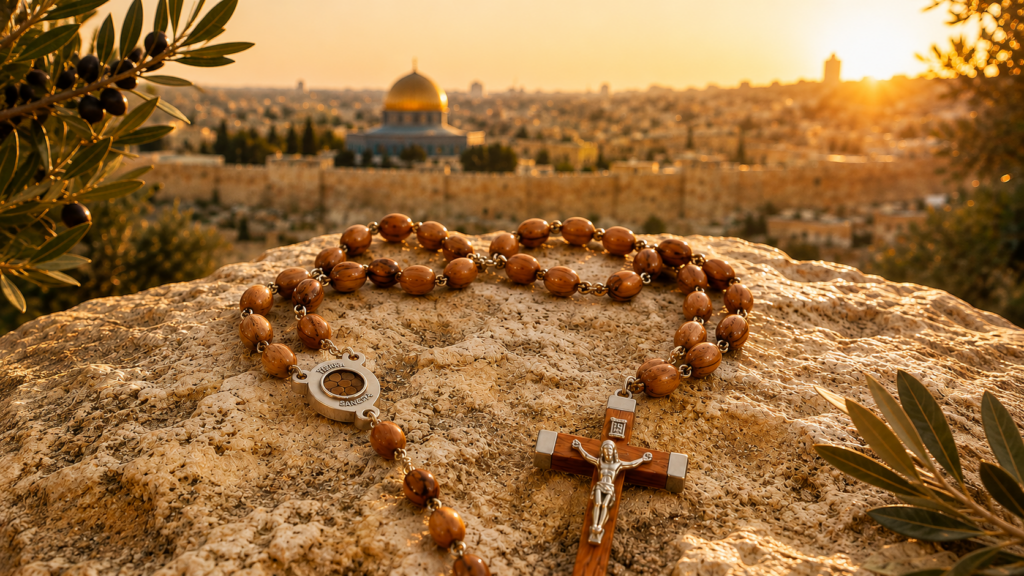
An olive wood rosary feels different from the moment prayer begins. The beads are warm, naturally varied, and marked by the beautiful grain of olive wood. For believers seeking a devotional item with both practical purpose and spiritual meaning, olive wood rosaries offer a special connection to prayer and the Holy Land.
A rosary can become part of important moments in life. It may be held during daily prayer, carried through a difficult season, or given for First Communion, Confirmation, baptism, or another meaningful occasion.
Why Olive Wood Has Biblical Meaning
The olive tree appears throughout Scripture and has long been associated with peace, blessing, endurance, and God’s provision.
In the story of Noah, a dove returned carrying an olive leaf, signaling hope after the flood. Olive oil also had many uses in biblical life, including anointing, lamps, hospitality, and sacred service.
The Mount of Olives holds particular importance for Christians because of its connection to the life and ministry of Jesus.
For these reasons, olive wood carries special meaning for many believers. A rosary made from this natural material can serve as a reminder of Scripture, prayer, and the land of the Bible.
What Makes Olive Wood Rosaries Unique
Natural olive wood has distinctive grain patterns and colors. Some beads may appear light and golden, while others have darker lines running through the wood.
Therefore, no two olive wood rosaries will look exactly alike.
Many designs feature smooth wooden beads together with a crucifix and center medal. Some are simple enough for everyday prayer, while others include more detailed religious symbols.
The natural feel of the wood is another reason many believers appreciate these rosaries. The beads feel warm and comfortable in the hand during prayer.
A Meaningful Connection to the Holy Land
For many Christians, an olive wood rosary from the Holy Land carries an additional spiritual connection.
Bethlehem and the surrounding biblical lands hold tremendous importance in Christian history. A devotional item connected to this region can serve as a tangible reminder of the places described throughout Scripture.
This also makes an olive wood rosary a thoughtful gift for someone who has visited the Holy Land or dreams of making a pilgrimage there.
Choosing an Olive Wood Rosary
Consider how the rosary will be used before choosing one.
For daily prayer, comfortable beads and strong construction are especially important. A rosary carried in a purse or pocket should also be compact enough for regular use.
For a religious milestone, presentation may matter more. A beautiful olive wood rosary can make a meaningful gift for First Communion, Confirmation, baptism, weddings, Christmas, Easter, or other important occasions.
Quality also matters. Look for smoothly finished beads, secure connections, and a firmly attached crucifix.
Natural differences in the color and grain of olive wood are normal. In fact, these variations are part of what makes every piece unique.
Using an Olive Wood Rosary for Prayer
The rosary is traditionally used to meditate on the life of Christ through prayer and reflection.
Moving from one bead to another creates a gentle rhythm that can help believers remain focused. This can be especially meaningful during difficult seasons when prayer feels challenging.
There is no need to rush. The purpose is to create space for prayer and reflection on Christ.
The natural texture of olive wood can make this experience feel especially peaceful and grounded.
Caring for Olive Wood Rosaries
Olive wood should be treated gently so that it remains beautiful for years.
Avoid soaking the rosary in water or leaving it in very damp or hot environments. Excess moisture and prolonged heat can damage natural wood.
Use a soft, dry cloth to remove dust or fingerprints. Avoid harsh cleaners and alcohol-based products.
When the rosary is not being used, keeping it in a pouch, small box, or dedicated prayer space can help protect the beads and prevent tangling.
A Meaningful Gift That Encourages Prayer
An olive wood rosary combines natural beauty, biblical heritage, and devotional purpose.
It can be given for First Communion, Confirmation, Christmas, Easter, Mother’s Day, Father’s Day, or simply as an encouragement to someone going through an important season of life.
More importantly, it can become a lasting companion in prayer and a reminder to remain close to God.
Explore our collection of authentic Holy Land olive wood rosaries at 3 Arches USA and discover a meaningful gift inspired by prayer, Scripture, and biblical heritage.
“Bringing a piece of the Holy Land to your home.”

Recent Comments