
Calvary Cross Meaning and Everyday Use

Few Christian symbols carry the same weight as the Calvary Cross. At first glance, its design is simple: a cross standing above three steps. Yet its meaning reaches deep into the heart of the Gospel.
For many believers, the Calvary Cross is more than a religious design. It serves as a visible reminder of Christ’s sacrifice, the hope of redemption, and the call to walk faithfully with God.
What Does the Calvary Cross Represent?
The Calvary Cross points directly to the crucifixion of Jesus at Calvary, also known as Golgotha. This is where the Gospel accounts describe the crucifixion of Christ.
Traditionally, three steps appear beneath the cross. Christians often interpret these steps as representing faith, hope, and love. Others see them as a reminder of the believer’s journey toward God.
Together, the cross and steps create a symbol filled with Christian meaning. The cross recalls sacrifice and redemption. Meanwhile, the steps remind believers of the faith they are called to live each day.
Therefore, the Calvary Cross does not speak only of suffering. It also points toward mercy, hope, and the promise of new life.
Why the Calvary Cross Still Matters Today
Christian symbols can become familiar over time. However, the Calvary Cross continues to invite reflection because its design tells a story.
The cross immediately points toward Jesus and His sacrifice. At the same time, the three steps beneath it add another layer of meaning.
For many believers, displaying a Calvary Cross provides a simple way to keep the message of Christ visible in everyday life.
It can stand in a prayer space, hang on a wall, or rest beside a Bible. Wherever it appears, the symbol can encourage believers to remember the foundation of their faith.
The Meaning of the Three Steps
The three steps are one of the features that distinguish the Calvary Cross from a traditional cross.
A common Christian interpretation connects them with faith, hope, and love. These three virtues appear together in 1 Corinthians 13:13 and remain central to Christian life.
Faith calls believers to trust God.
Hope reminds them to look toward His promises.
Love calls them to reflect the character of Christ in their relationships with others.
Because of this symbolism, the three steps can add meaningful depth to the cross. They remind believers that Christian faith involves both remembering Christ’s sacrifice and living according to His teachings.
A Calvary Cross for the Christian Home
A Calvary Cross can bring biblical meaning into many areas of the home.
Some families place one near the entrance as a visible expression of faith. Others display it in a living room, bedroom, or dedicated prayer space.
A smaller standing cross may work beautifully beside a Bible or devotional journal. Meanwhile, a larger wall cross can become a meaningful focal point in the home.
The purpose does not need to be complicated. Simply seeing the cross during everyday life can provide a quiet reminder to pray, trust God, and remember Christ’s sacrifice.
Olive Wood and Holy Land Inspiration
Material can also add meaning to a Calvary Cross.
Olive wood holds special significance for many Christian families because of its connection to the biblical landscape and the long tradition of Holy Land craftsmanship.
Its natural grain gives every piece a distinctive appearance. In addition, the warm character of the wood works beautifully with Christian devotional designs.
For believers who value Holy Land heritage, an olive wood Calvary Cross can provide a meaningful connection between biblical symbolism and traditional craftsmanship.
Metal, resin, and other materials can also create beautiful crosses. However, the best choice depends on personal preference, the intended setting, and the purpose of the gift.
A Meaningful Christian Gift
The Calvary Cross can also make a thoughtful Christian gift because its symbolism suits many important occasions.
For a baptism or dedication, it can mark an important moment of faith. During Easter, it points toward Christ’s crucifixion and resurrection. As a sympathy or memorial gift, the cross can offer a quiet reminder of Christian hope.
It can also make a meaningful present for birthdays, ministry milestones, pastoral appreciation, housewarmings, or other faith-filled occasions.
When choosing one as a gift, consider the recipient. Some people prefer a simple traditional design. Others may appreciate a handcrafted piece with Holy Land inspiration.
The most meaningful choice is usually the one that reflects the recipient’s faith and the reason for giving it.
How to Display a Calvary Cross With Purpose
Placement can help turn a Christian symbol into an everyday reminder of faith.
A family may place a Calvary Cross near the front door. Another may keep one in a prayer corner alongside a Bible and devotional items.
Churches can also use the symbol in prayer rooms, classrooms, offices, or seasonal displays.
Wherever it appears, the goal is not decoration alone. Instead, the cross can encourage reflection and remembrance.
A carefully chosen place allows the symbol to remain visible during ordinary moments of life. In this way, it can quietly point the heart back toward Christ.
A Lasting Symbol of Faith, Hope, and Love
The Calvary Cross continues to carry powerful Christian meaning because it brings several important truths together in one simple image.
The cross points toward Christ’s sacrifice and redemption. The three steps traditionally remind believers of faith, hope, and love.
Together, they create a symbol that can encourage prayer, reflection, and faithful living.
Whether displayed in a home, church, office, or prayer space, the Calvary Cross offers more than visual beauty. It provides a lasting reminder of Christ and the hope at the center of Christian faith.
For those seeking meaningful Christian gifts inspired by Scripture and the Holy Land, explore our collection at 3 Arches USA.
“Bringing a piece of the Holy Land to your home.”
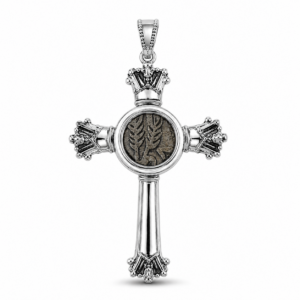
Silver Plated Calvary Cross Necklace – Holy Land Stone Pendant from Jerusalem



Recent Comments